
Note
For detailed information about the Procedure for
BIS ISI Certification, visit:
Lorem ipsum dolor sit amet, consectetur adipiscing elit, sed do eiusmod tempor incididunt ut labore
In this competitive scenario, it isn't easy to survive in the market without a standard quality and certified product. BIS license may also be required to sell products in the Indian market.
To get BIS certification and produce a standard quality product, the manufacturer must ensure that their product must follow the specified Indian standard.
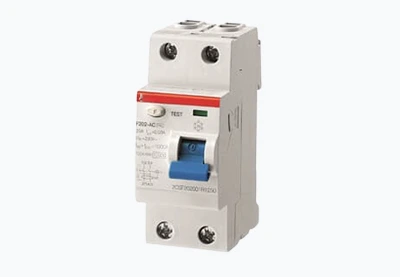
Let's take a closer look at IS 12640(Part 2):2016/IEC 61009-1:2012 Residual Current Operated Circuit Breakers.
In this competitive scenario, it isn't easy to survive in the market without a standard quality and certified product. BIS license may also be required to sell products in the Indian market.
To get BIS certification and produce a standard quality product, the manufacturer must ensure that their product must follow the specified Indian standard.
Let's take a closer look at IS 12640(Part 2):2016/IEC 61009-1:2012 Residual Current Operated Circuit Breakers.
This Standard applies to residual current operated circuit-breakers with integral overcurrent protection that is functionally independent of or functionally dependent on line voltage for household and similar uses with rated voltages not exceeding 440 V a.c., rated currents not exceeding 125 A, and rated short-circuit capacities not exceeding 25000 A for operation at 50 Hz or 60 Hz.
This standard applies to devices that perform the functions of detecting residual current, comparing the value of this current with the residual operating value, opening the protected circuit when the residual current exceeds this value, as well as making, carrying, and breaking overcurrents under specified conditions.
These devices are intended to protect people from indirect contact by connecting the exposed conductive parts of the installation to an appropriate earth electrode, as well as to protect the wiring installations of buildings and similar applications from overcurrents. They can be used to protect against fire hazards caused by a persistent earth fault current without requiring the overcurrent protective device to be activated. RCBOs with a rated residual operating current of less than 30 mA is also used as an additional safeguard if the protective means against electric shock fail.
RCBOS must be designed and built in such a way that their normal use is safe and does not endanger the user or the environment. The residual current detection and release must be located between RCBO's incoming and outgoing terminals. External interventions other than those specifically intended to change the setting of the residual operating current shall not be permitted to alter the operating characteristics of the RCBO.
The tests specified in the standard are used to ensure that all compliance is met. RCBO shall not sustain damage that impairs its functions or its safe use. The operating characteristics of RCBOS under residual current or overcurrent conditions must meet standard requirements.
Tests shall be carried out in accordance with the standard.
Marking shall be done as per IS 12640 (Part2):2016. Manufacturers must obtain a BIS license from the Bureau of Indian Standards to use a standard mark (ISI Mark). The Bureau grants a license based on a successful assessment of manufacturing infrastructure, production process, and quality control and testing capabilities during a visit to its manufacturing premises.
A streamlined process designed to ensure compliance, quality, and efficiency at every step.
Preparation and submission of required documents.
Filing the application with BIS along with applicable fees.
Inspection and evaluation of manufacturing facility.
Testing of product samples in BIS recognized laboratory.
Successful evaluation and grant of BIS ISI Mark license.
Watch our detailed video to understand each step involved in obtaining BIS ISI Mark Certification.
For detailed information about the Procedure for
BIS ISI Certification, visit:
The estimated time frame for obtaining BIS certification under IS 12640(Part 2):2016 is:
If a product falls under the scope of the BIS Conformity Assessment Scheme, All the manufacturers, importers, and foreign entities must obtain BIS ISI Certification. The Bureau may cancel the License if the product fails to meet certification requirements.
Aleph INDIA has been serving the industry as a single-window operator for all product regulatory compliance. We can assist importers or manufacturers in meeting all criteria for importing or selling a product in the Indian market.

Partner with Aleph INDIA to simplify your BIS certification journey and ensure full compliance with IS 12640(Part 2):2016 for robust and high-performance packaging solutions.

 Japan
Japan Another Successful Audit completed by the Bureau of Indian Standards! Proud moment as Aleph INDIA Group's client, M/S. UACJ (Japan), aces the BIS audit for W...

 South Korea
 As Aleph India is expanding its boundaries, this is the picture where Mr. Tiwari and Mr. Cheema associating with the members of “KAMA INDIA” (South Korea). A...

 India
India As per the gazette notification, Govt. of India, no person shall manufacture or store product for sale, import, sell or distribute goods which do not conform...
Hear from industry leaders who have experienced the
impact of partnering with
Aleph.

 Aleph INDIA
Sr. Sales Manager
IVicon Security Tech Private Ltd
Aleph INDIA
Project Manager | Remidio
Innovation Solutions Pvt Ltd
Aleph INDIA
CEO | Makercubs
Technologies Pvt Ltd
Aleph INDIA
Technical Vice President |
AIR LIQUIDE MEDICAL SYSTEMS PRIVATE LIMITED