Note
For detailed information about the Procedure for
BIS ISI Certification, visit:
Lorem ipsum dolor sit amet, consectetur adipiscing elit, sed do eiusmod tempor incididunt ut labore
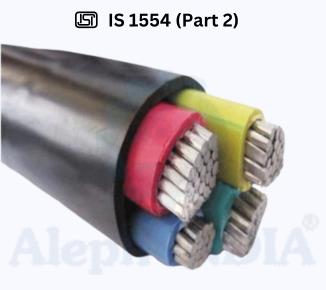
BIS certification is essential for PVC Insulated (Heavy Duty) Electric Cables as per IS 1554 (Part 2):1988. This standard ensures that electric cables meet stringent safety, performance, and durability requirements, which are vital for the reliable and secure transmission of electricity in high-voltage applications. These cables are commonly used in power distribution networks, industrial plants, and infrastructure projects where robustness and efficiency are critical. Compliance with IS 1554 (Part 2) reflects a manufacturer's commitment to delivering safe, high-quality, and dependable electrical cables.
The IS 1554 (Part 2) standard specifies the design, construction, and performance requirements for PVC insulated heavy-duty electric cables used in high-voltage applications. It outlines the technical parameters for conductor materials, insulation thickness, and overall construction to ensure optimal electrical conductivity and mechanical robustness. The standard also emphasizes resistance to environmental stressors such as heat, moisture, and chemicals, making these cables suitable for demanding operating conditions. Rigorous testing protocols ensure that the cables maintain their integrity and safety throughout their lifecycle.
| Product Name | PVC Insulated (Heavy Duty) Electric Cables, Part 2: for Working Voltages from 3'3 kV up to and Including 11 kV |
| Applicable Indian Standard | IS 1554(Part 2):1988 |
| Applicable Certification Scheme | Product Certification Scheme (ISI Mark Scheme) Scheme 1 - Schedule 2 |
| Compliance Requirement | Mandatory |
| Quality Control Order | View QCO |
| Scope as per Standard | This standard (Part 2) specifies the requirements and testing procedures for both armoured and unarmoured PVC insulated and sheathed cables. It applies to single-core, twin-core, three-core, and multi-core cables designed for electric supply and control purposes. |
Mandatory BIS certification under IS 1554 (Part 2) ensures that these cables adhere to national safety and quality benchmarks. For users, it provides assurance of reliable performance, minimizing risks such as electrical failures, overheating, or short circuits. For manufacturers, BIS certification enhances brand credibility, facilitates market acceptance, and underscores their commitment to maintaining high product quality and performance standards in the electrical sector.
A streamlined process designed to ensure compliance, quality, and efficiency at every step.
Preparation and submission of required documents.
Filing the application with BIS along with applicable fees.
Inspection and evaluation of manufacturing facility.
Testing of product samples in BIS recognized laboratory.
Successful evaluation and grant of BIS ISI Mark license.
Watch our detailed video to understand each step involved in obtaining BIS ISI Mark Certification.
For detailed information about the Procedure for
BIS ISI Certification, visit:
The estimated time frame for obtaining BIS certification under IS 1554 (Part 2):1988 is:
BIS certification under IS 1554 (Part 2) is a crucial step in ensuring the safety, reliability, and durability of PVC insulated heavy-duty electric cables used in high-voltage installations. By adhering to this standard, manufacturers demonstrate their dedication to quality and safety, earning trust from customers and stakeholders.
For expert guidance in navigating the BIS certification process, trust Aleph INDIA to ensure seamless compliance with national standards for electrical cables.

Partner with Aleph INDIA to simplify your BIS certification journey and ensure full compliance with IS 1554 (Part 2):1988 for robust and high-performance packaging solutions.
BIS certification ensures that the cables meet national standards for safety, durability, and performance. It guarantees compliance with stringent requirements for high-voltage applications, minimizing risks such as electrical failures and hazards.
The standard specifies the design, construction, and performance parameters for PVC insulated heavy-duty cables, including conductor material, insulation properties, and mechanical strength. It also outlines testing protocols for resistance to heat, moisture, and chemicals.
The typical timeline is approximately 30 days for Indian manufacturers and about 180 days for foreign manufacturers, depending on the application process and testing requirements.
For manufacturers, BIS certification enhances credibility, market access, and compliance with national standards. For users, it assures reliable performance, safety, and durability of the cables, reducing the risk of electrical issues.

 Taiwan
 Another Successful Audit completed by the Bureau of Indian Standards! Proud moment as Aleph INDIA Group's client, M/S. GSLIDE CORPORATION.(Taiwan) , aces the...
 South Korea
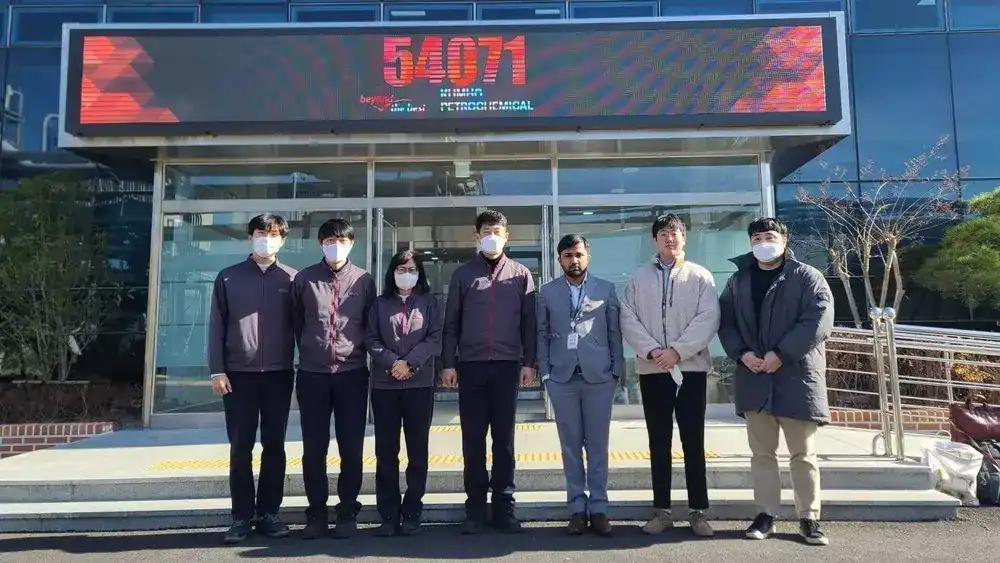
 Recently, M/S KUMHO PETROCHEMICAL ULSAN SYNTHETIC RESIN PLANT in Korea underwent a successful BIS Audit conducted by the Bureau of Indian Standards, the lead...
 South Korea
 The Bureau of Indian Standards, recently concluded a thorough BIS Audit for M/S Samyang Corporation & SAMYANG KASEI CO. LTD. This detailed audit centered on ...
Hear from industry leaders who have experienced the
impact of partnering with
Aleph.
 Aleph INDIA
Sr. Sales Manager
IVicon Security Tech Private Ltd
Aleph INDIA
Project Manager | Remidio
Innovation Solutions Pvt Ltd
Aleph INDIA
CEO | Makercubs
Technologies Pvt Ltd
Aleph INDIA
Technical Vice President |
AIR LIQUIDE MEDICAL SYSTEMS PRIVATE LIMITED